India’s retail market is often associated with big cities like Mumbai, Delhi, and Bangalore. Most large brands compete aggressively in these metro hubs, chasing urban consumers. However, one entrepreneur saw a completely different opportunity—small-town India.
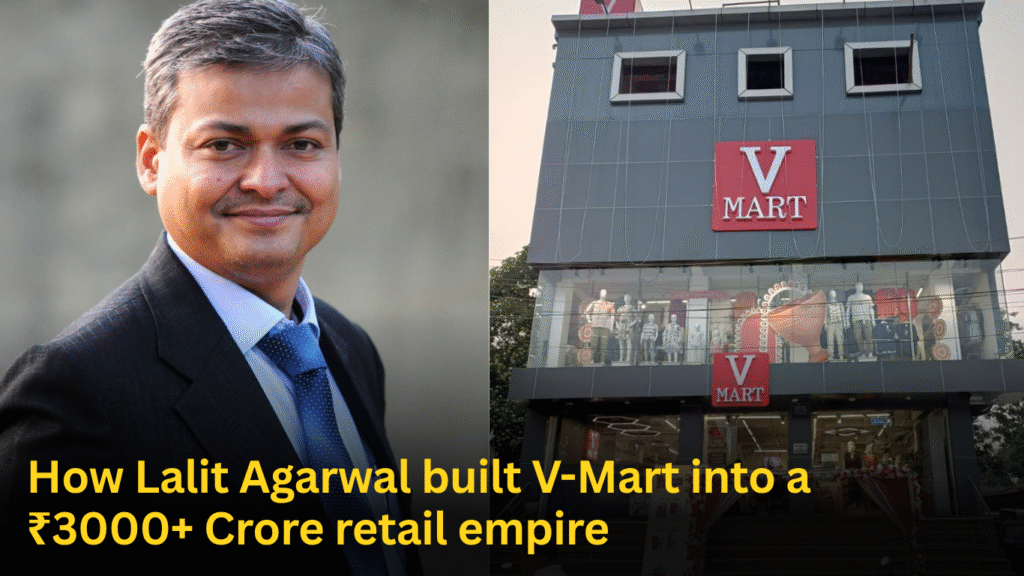
Lalit Agarwal, the founder of V-Mart Retail, built a powerful retail empire by focusing on Tier 2, Tier 3, and Tier 4 cities. What started as a modest venture in the early 2000s has now grown into a multi-thousand crore business with hundreds of stores across the country.
This is not just a success story. It is a lesson in identifying overlooked markets and building a business around real demand.
Early Journey and Business Idea
Lalit Agarwal started V-Mart around 2002–2003 with a clear vision:
to provide affordable fashion to India’s lower and middle-income population in smaller cities.
At that time, organized retail was largely concentrated in metro areas. Small towns lacked access to quality clothing at reasonable prices. Consumers had aspirations but limited options.
Agarwal identified this gap early and built his business model around it.
First Store and Initial Growth
The first V-Mart store was launched in Ahmedabad in 2003. The goal was simple:
- Offer a wide range of clothing for families
- Keep prices affordable
- Deliver a shopping experience similar to malls
Instead of expanding too quickly, the company focused on steady growth and operational efficiency.
The Core Strategy Behind V-Mart’s Success
1. Focus on Small-Town India
While competitors targeted urban markets, V-Mart focused on underserved regions. These towns had:
- Growing income levels
- Limited retail options
- High demand for affordable products
This decision gave V-Mart a strong first-mover advantage.
2. Affordable Pricing Model
V-Mart positioned itself as a value retailer. Its pricing strategy made fashion accessible to:
- Lower-income households
- Middle-class families
- Budget-conscious consumers
This helped build strong customer loyalty.
3. Localized Product Selection
Unlike big brands that follow global trends, V-Mart focused on local preferences:
- Festival-based collections
- Region-specific clothing styles
- Practical and everyday wear
This approach made the brand more relatable to its target audience.
4. Cluster-Based Expansion
Instead of spreading stores randomly, V-Mart expanded in clusters:
- Multiple stores in nearby towns
- Reduced logistics and supply chain costs
- Better inventory management
This strategy improved efficiency and profitability.
5. Disciplined Financial Growth
The company avoided aggressive expansion without control. It focused on:
- Controlled working capital
- Sustainable growth
- Efficient operations
This discipline helped V-Mart scale without major financial risks.
Growth and Current Scale
Over the years, V-Mart has grown significantly:
- 500+ stores across India
- Presence in hundreds of cities
- Revenue exceeding ₹3000 crore annually
- Thousands of employees nationwide
From a single store, it has become one of India’s leading value retail chains.
Challenges Along the Way
Like any business, V-Mart faced challenges:
- Competition from large retail chains
- Changing consumer behavior
- Supply chain complexities
- Economic fluctuations
However, its strong focus on small-town markets helped it stay resilient.
About Marketing Mirrors
Marketing Mirrors is a fast-growing digital storytelling platform that showcases real-life success stories of Indian entrepreneurs, creators, and innovators. Through their content, they highlight brands and individuals who’ve turned ideas into impact — inspiring thousands to chase their dreams.