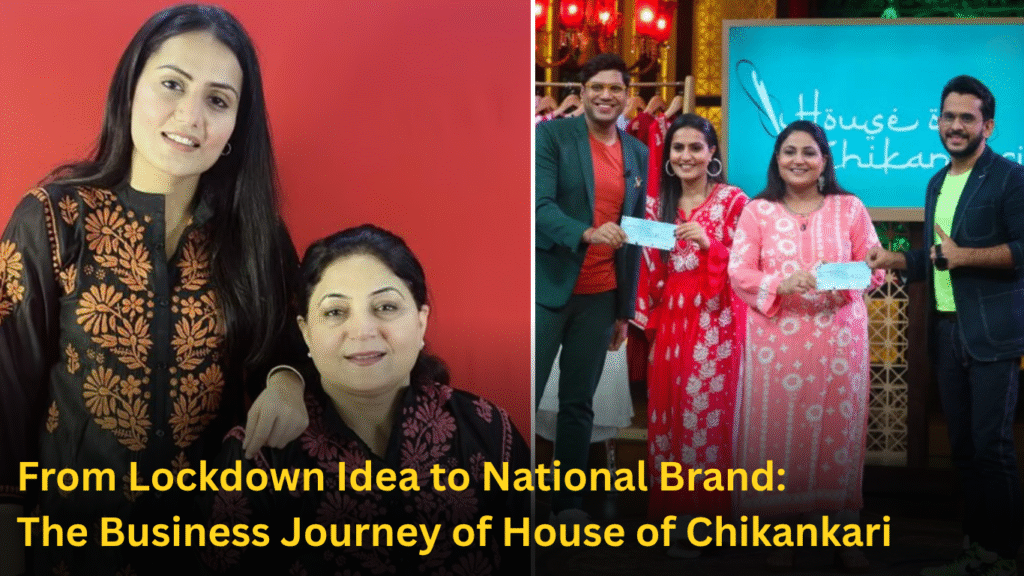
House of Chikankari is one of India’s most remarkable modern craft success stories. Built from a small home setup during the lockdown, the brand has grown into a nationwide movement that preserves heritage, empowers artisans, and delivers handcrafted fashion to a global audience. Their journey proves that timeless craftsmanship can thrive in the digital era when backed by purpose, strategy, and heart.
The Beginning: A Homegrown Dream with a Clear Purpose
House of Chikankari began in 2020, right in the middle of the nationwide lockdown, when mother-daughter duo Poonam Rawal and Aakriti Rawal decided to turn a crisis into a creative opportunity. Poonam brought decades of experience and deep understanding of Chikankari embroidery, while Aakriti contributed her marketing knowledge and a digital-first vision.
With limited external support, they started from their home in Delhi with a small initial investment and a strong mission: to revive traditional Chikankari embroidery and provide sustainable, dignified livelihoods to artisans whose work had come to a standstill during the pandemic. Blending traditional craft expertise with modern design sensibilities, they began selling through social media and small online channels, winning customers who craved authenticity and craftsmanship.
Fueled by a passion for ethical work, a sharp understanding of consumer trends, and a commitment to keeping heritage alive, their modest home operation quickly transformed into a full-fledged direct-to-consumer brand supported by a growing community of customers.
A Remarkable Growth Story
As the brand’s reputation spread, House of Chikankari scaled rapidly, achieving impressive early revenue and expanding their artisan network across various regions. Their customer base grew steadily across India and international markets, reflecting rising demand for handmade, ethically produced clothing. A feature on Shark Tank India significantly strengthened their credibility, leading to a strategic investment from respected entrepreneurs that enhanced their operational capabilities. With a consistently rising annual turnover and an ever-expanding portfolio of craft-based collections, House of Chikankari has established itself as one of India’s most admired craft-first fashion labels.
Business Model: Purpose-Led, Craft-Driven, Digital-First
House of Chikankari’s business model is built around authenticity, sustainability, and transparency. Their strategy includes:
•Direct Artisan Partnerships
The brand works directly with thousands of artisans, eliminating middlemen and ensuring fair wages with steady, dignified employment. This model supports craft clusters and revives techniques that were fading away.
• Small-Batch, High-Quality Production
Each product is handcrafted in small batches, maintaining quality, reducing waste, and honoring the slow fashion philosophy.
• Fusion of Tradition and Modernity
While the embroidery remains true to itses and designs are carefully modernized to appeal to younger consumers without compromising authenticity.
• D2C and Digital Selling
From Instagram to their website, the brand thrives on a strong online presence. They use storytelling, artisan narratives, and transparent communication to build trust with customers.
• Expansion into Multi-Craft Collections
Starting with Chikankari, the brand expanded into other Indian crafts such as
- Kashmiri embroidery
- Ikat
- Hand-block printing
- Artisanal fabric work from regional clusters
This diversification allowed them to grow their artisan network while offering fresh editions of handcrafted apparel.
• Purpose as the Brand’s Core Identity
Every aspect of House of Chikankari revolves around uplifting artisan communities, preserving cultural heritage, and building a responsible fashion ecosystem.
Why House of Chikankari Continues to Shine
Consumers connect deeply with the brand because of its commitment to:
- Reviving heritage craft with honesty
- Transparent sourcing and production
- Fair and dignified artisan employment
- Sustainable slow fashion practices
- High-quality, handcrafted garments
- A digital-first approach that educates as much as it inspires
Their journey reflects how a craft-first brand can scale without abandoning its values.
.About Marketing Mirrors
This story is brought to you by Marketing Mirrors, a platform dedicated to sharing powerful startup journeys, brand case studies, and marketing insights. We decode business growth, highlight inspiring founders, and bring stories that motivate creators, entrepreneurs, and marketers across India.