
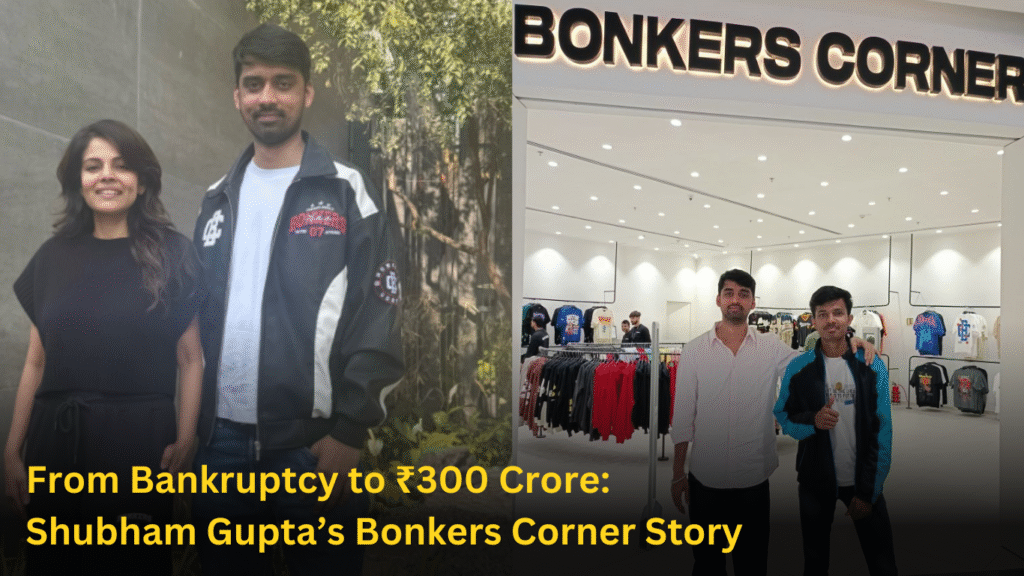
In India’s startup ecosystem, degrees often get more attention than determination. But Shubham Gupta’s journey proves something different. The founder of Bonkers Corner turned personal crisis into a fast-growing fashion empire — without an MBA, without venture funding in the early days, and without shortcuts.
This is not a “get rich quick” story. It is a story about resilience, street-level learning, and smart brand positioning.
Early Life and Struggles
Shubham Gupta completed his education only till 12th grade. In 2011, his family’s long-running textile business collapsed, leaving them in financial distress. Instead of choosing a safe job, he stepped into the garment markets of Mumbai to understand the industry from the ground up.
He worked with fabrics, suppliers, and manufacturers. He learned about sourcing, white-label production, margins, inventory cycles, and customer behavior. No classroom. Just real market experience.
This foundation later became the backbone of Bonkers Corner.
The Birth of Bonkers Corner in 2020
In 2020, during the pandemic when most businesses were shutting down, Shubham launched Bonkers Corner as a direct-to-consumer (D2C) streetwear brand.
The idea was simple but powerful:
Young consumers wanted bold, expressive, pop-culture-inspired fashion at affordable prices.
Bonkers Corner focused on:
- Oversized T-shirts
- Hoodies
- Trend-based drops
- Anime and pop-culture designs
- Gen Z-focused branding
Instead of depending heavily on marketplaces, the brand built its own online presence and controlled its customer relationship directly.
What Makes Bonkers Corner Different?
Many fashion brands outsource production. Bonkers Corner built a vertically integrated model.
That means:
- In-house manufacturing
- Better control over quality
- Faster inventory turnaround
- Higher margins
The brand reportedly produces around 3 lakh units per month. Inventory cycles are kept under 45 days, which is crucial in fast fashion.
Revenue distribution is also smartly balanced:
- ~55% from website sales
- ~40% from offline stores
- ~5% from marketplaces
Even more impressive is a customer retention rate of around 45 percent, which is strong for a fashion brand.
Revenue, Growth and Valuation
Bonkers Corner has grown rapidly in just a few years.
Key numbers:
- ₹125 crore revenue in FY 2024-25
- Projected ₹170–180 crore revenue in FY 2025-26
- ₹300 crore valuation during Shark Tank India pitch
The brand has expanded to more than 19 offline stores across major Indian cities and continues to grow its physical retail presence.
Unlike many startups, Bonkers Corner scaled largely without institutional funding in its early phase. It was bootstrapped and built on operational efficiency.
The Shark Tank India Moment
Shubham Gupta appeared on Shark Tank India Season 5 with a bold ask:
₹1.5 crore for 0.5 percent equity — valuing the company at ₹300 crore.
It was one of the most confident pitches on the show. Eventually, Namita Thapar invested ₹1.5 crore at his proposed valuation.
The appearance significantly boosted brand awareness and strengthened Bonkers Corner’s credibility in the Indian startup ecosystem.
Expansion Plans and Future Vision
Bonkers Corner is now planning:
- Investment in a new, larger manufacturing facility
- Increased offline retail expansion
- International market entry starting with the UAE
- Continued focus on Gen Z fashion trends
The strategy is clear: control the supply chain, scale responsibly, and stay culturally relevant.
About Marketing Mirrors
Marketing Mirrors is a fast-growing digital storytelling platform that showcases real-life success stories of Indian entrepreneurs, creators, and innovators. Through their content, they highlight brands and individuals who’ve turned ideas into impact — inspiring thousands to chase their dreams.